
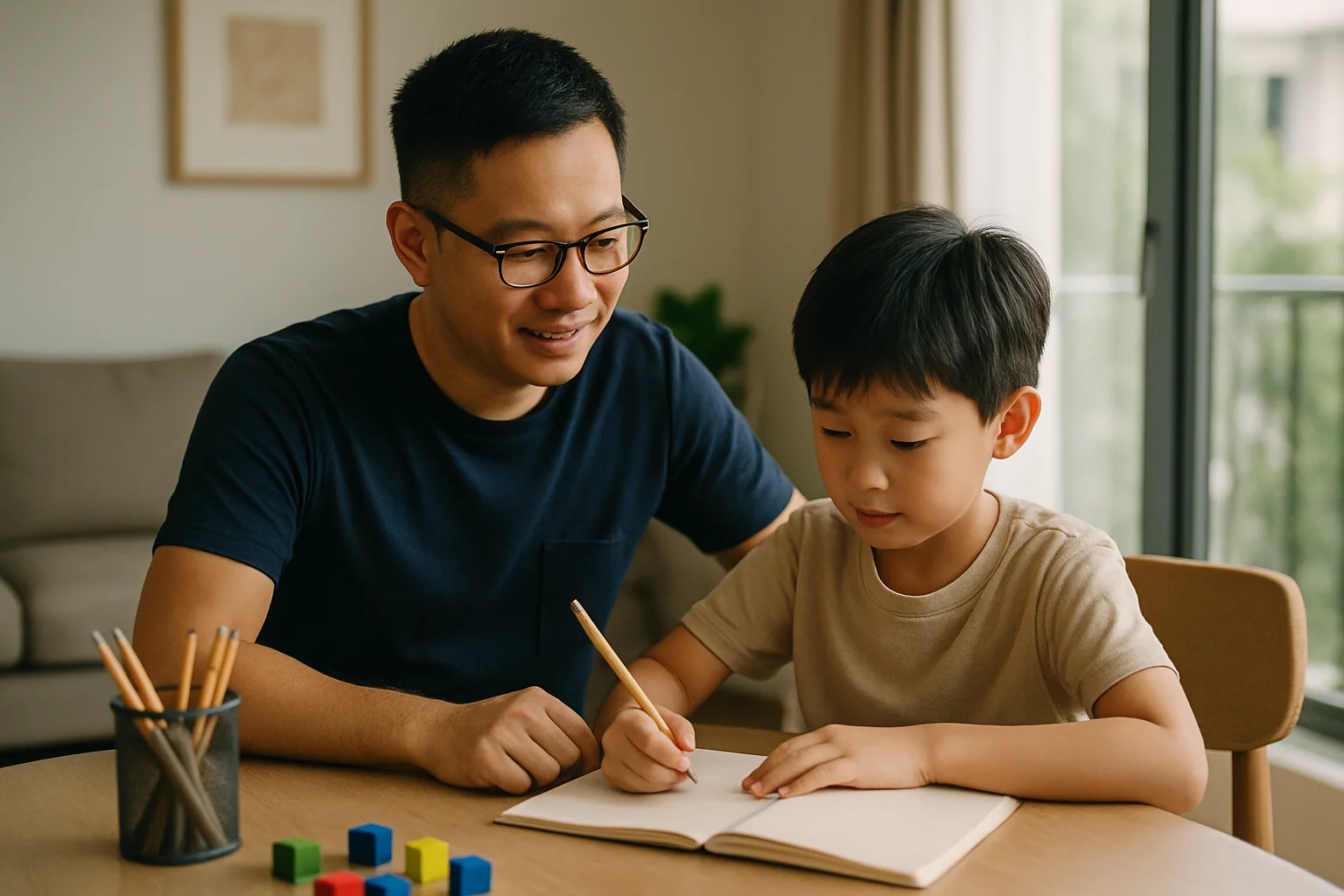
If homework time often ends with reminders, sighs, bargaining, or “Why are you not listening?”, you are not alone.
Many parents of children aged 6–9 worry when their child cannot sit still, keeps sharpening pencils, asks for snacks, or stares at the page without starting. It can feel frustrating, especially after a long school day and a long work day for you too.
But a distracted child is not always a lazy child. At this age, concentration is still developing. Many children need to be taught how to begin, how to stay with a task, and how to return to it after their mind wanders.
The good news is that focus can be built gently, with small routines that make learning feel less overwhelming. If you are trying to improve concentration child habits at home, start with the basics below.
Why Your Child May Be Losing Focus
Before jumping into correction, pause and observe. Your child may be struggling because:
- The task feels too hard, so they avoid it
- The task feels too easy, so they lose interest
- Instructions are too long or unclear
- The table is full of visual distractions
- They are tired, hungry, or overstimulated
- They do not know what the “first step” is
- They are worried about getting it wrong
When we understand the reason behind the distraction, we can support the child more calmly and effectively.
Create a Calm “Focus Spot”
Your child does not need a perfect study room. A small, consistent space is enough.
Choose one place for homework or revision, and keep it simple:
- Clear the table before starting
- Keep only what is needed for that task
- Place toys, devices, and unnecessary stationery away
- Have water nearby
- Use a small paper checklist so your child can see what is next
A predictable space helps your child’s brain recognise, “This is where I settle down.” Over time, the routine becomes a signal for focus.
Use Short Focus Blocks
For many children aged 6–9, “Finish all your homework now” feels too big. Shorter blocks work better.
Try this rhythm:
- 10 minutes: one clear task, such as spelling practice
- 2 minutes: stretch, drink water, or walk to the window
- 10 minutes: another clear task, such as five maths questions
- 1 minute: quick praise and reset
Use a timer if it helps, but keep it calm. The timer should not feel like pressure. It is simply there to show your child, “You only need to focus on this small part first.”
Help Your Child Start Well
Some children look distracted because they do not know how to begin. Instead of repeating, “Just do it,” sit beside them for the first two minutes.
Ask simple guiding questions:
- “What is the first thing you need to do?”
- “Which question will you start with?”
- “What will you do if you are not sure?”
- “Do you need to read the instructions again?”
Once they have started, slowly step away. This teaches independence without leaving them feeling lost.
Reduce Verbal Reminders
Too many reminders can become background noise. Instead of constantly saying, “Focus, focus,” try using quiet cues.
For example:
- Point to the checklist
- Tap the question they are working on
- Place a small “focus card” on the table
- Use a gentle phrase like, “Back to this one.”
This keeps the mood calmer and helps your child return to the task without feeling scolded.
Praise the Focus You Want to See
Children repeat what they feel successful in. Notice effort, not only correct answers.
You can say:
- “You came back to your work after your break. That is good focus.”
- “You stayed with this question even though it was tricky.”
- “You checked your answer carefully.”
- “You started faster today than yesterday.”
Specific praise helps your child see that concentration is something they can practise and improve.
Build Focus Slowly
Improving concentration is not about forcing your child to sit longer. It is about helping them feel safe, clear, and capable enough to stay with a task.
Start small. Choose one routine this week: a clearer table, a shorter focus block, or a simple checklist. When your child experiences small wins, focus becomes less of a daily battle and more of a skill they are learning.